Animations are certainly NOT my specialty when it comes to SolidWorks. I have created a few animations over the years but I have never really been completely satisfied with the quality of the videos I have produced. Is it because of shortcomings in the software? No, it is mainly my lack of time to learn all the ins and outs of creating a good animation.
One of the jobs that we are working on right now includes the creation of some animations to be placed into a PowerPoint presentation. With this our CAD department is finally digging into the animation portion of SolidWorks and have already put out some GREAT animations. I am also fortunate in that I have some great Blogger friends in Matt and Rob that I can bounce a few questions off of.
I thought I would pass along a few tips on how you can get some good results quickly when creating AVI files using Motion Manager. Let’s take a step back first and review one of the big changes in SolidWorks 2008. The SolidWorks Animator product was removed as an add-in and included (with all of it’s functionality) across the entire SolidWorks product line under what is now called Assembly Motion.
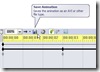
Rather than covering all the dos and don’ts on how to set up a Motion Study, what I want to focus on is some methods you can use to get good final results in your animation files. When you select the Save Animation button, you are presented with three file options. You can save the file in an .AVI format, which is what most users use, or you can save the animation as a series of Targa or Bitmap images that represent each frame of the video. If you use the image options you will need some sort of third party software to produce the images into a video.
When you use the .AVI option you have the option to use the SolidWorks Screen to produce the images for each frame of the video OR you can use PhotoWorks. Rendering each frame of the animation can take MUCH longer than using the screen option. Fortunately you can set up Rendering and Animation tasks to automatically run overnight using the SolidWorks Task Scheduler. With the incredible enhancements to RealView in SolidWorks 2008, you can use the SolidWorks Screen option with RealView turned ON and get a very nice result in a fraction of the time it takes using PhotoWorks. This was one of the things I was most excited about last year when 2008 was announced and it has proven to be a useful option in creating animations.
One of the most important settings when creating an animation file is the Frames per second (FPS) setting. The default FPS is 7.5 which can leave the video a bit “choppy”. The higher the FPS, the smoother the motion in the animation. We have seen good results using 20-30 FPS. Once you click “Save” you are presented with one last window asking you how you want to compress the video. The default setting is “Microsoft Video 1″. This is the safest compression option but does NOT give the best results. We found that shadows, faces, and edges tend to get blurred and show grids patterns and lines that should not be present. The results can be improved with by using the Cinepak Codec that is available in all default SolidWorks installations. Users who view the video will need to have the Cinepak Codec installed on their system.
If you have Camtasia Studio installed on your machine you can use the TechSmith Screen Capture Codec (TSCC) option. Camtasia Studio is an absolutely awesome screen capture utility that I would say is used for a large majority of CAD vendor generated Demonstration Videos that you will find out there today. Like the Cinepak, the TSCC codec must be installed in order to see the video.
Another setting to watch would be the Key Frame number. Typically the lower the number the better but we have found that a Key Frame every 8 seconds tends to work very well. Decreasing this number does not result in as dramatic of an effect on the video as increasing the FPS.
One other notable option is the Full Frames (uncompressed) option. Since there is no video compression the resultant AVI file is HUGE! If you play the file using most media players the file will be very choppy. (This really confused me at first.) This appears to be a side effect of the file size and lack of compression. This HUGE file actually works very well if you import it into video production software such as Camtasia in that it can be used to create very nice Flash or Quicktime videos.
If you use the a codec the AVI will still in most cases upload to most video share sites. Since I cannot share publicly the animations we are working on now for obvious reasons, I prepared a very simple sample of an animation produced using the above recommended methods. The AVI file did successfully upload to YouTube even though it was made using the TSCC Compression. I lost a little bit of the quality in the upload process but the smoothness of the video gets the point across. Click below to see the video.
Stay tuned….much more to come!
Updated 4-30-08: When I initially wrote this article last night I did not realize that you have to have Camtasia Studio installed in order to use TSCC as the compression agent for the video. I have updated the text above to reflect this.
I’ve put it off writing about this subject matter for quite some time now but with the recent announcement of yet another CAD company touting Direct Modeling, CAD 2.0, Non-History based modeling, or whatever other industry term that is out there, I thought the time was right.
Siemens announcement yesterday no doubt shook some foundations around the CAD Industry. I’ve read articles or posts that range from “This is THE next big thing” to “It’s old news”. So which one is it? Or does the answer lie between the lines somewhere. Here is my take on it. Is Direct Modeling the next big thing? Simply put…No. It HAS been around for some time. Is it an important feature set that should be looked at by all CAD companies? YES.
Matt was correct yesterday when he said that SolidWorks has had some direct modeling functionality for some time now. A combination of the Move Face command and Instant3D does cover many of the topics we all saw in the video yesterday. Are those features developed to the level they should be? No. The Move Face command is very capable but there is no access to it via the Instant3D tools. Its success can be very dependent on what faces you select (In particular when there are fillets present). It is still a great tool for making tweaks and adjustments down the tree without having to understand the design intent of the sketches or worry about child dependencies. As Josh pointed out, Instant3D does require the feature history to be there in order to make changes to a model quickly.
Even with these existing features, I would still like to see additional capabilities and improved UI functions built into SolidWorks that allows more direct editing of imported models (which of course have NO history). You can do quite a bit with the tools they have now, but they need to be more powerful, easier to use, (especially for less experienced users) & should require LESS steps.
Will History Based Modeling be a thing of the past?
I do not agree with those who say that Direct Modeling will replace history based modeling. I believe that combining the two methods in the correct manner IS the best solution I have seen. I can’t tell you exactly what the correct manner will be but I’m sure the next 12 months will give us all much more insight. We all saw some pretty impressive things yesterday but there really wasn’t much in the way of an explanation on how the direct edits were shown in the tree itself. (Actually there was a quick view of a feature tree that shows a “Direct Edit9″ feature about 7:22 into the video.) With that said, I really like the approach that SolidWorks and Siemens is taking with this.
As with many things in the industry, time will tell. I do think there is something to the fact that 2 of the 4 major MCAD players have now quickly adopted some sort of marketing stance in direct modeling. The coming months will be interesting to say the least.
One of the most useful tools in the SolidWorks Customer Portal has had a bit of a facelift today which is sure to be a hit with all SolidWorks users. The SolidWorks Knowledge Base allows you to search posted Solutions and known Bugs (SPR’s) to get more details on topics across all SolidWorks products. It is the first link listed under the “My Support” area of the Customer Portal home page.
The previous search worked OK but was sometimes a little inconsistent in how it found results. The new search tool itself doesn’t really look all that different when you pull it up but when the search results come up everything is much improved. The advanced search option is now gone and is simplified with the option to search “Solutions” and/or “Bugs”. The search results are now posted in a more readable format that doesn’t include a table of results like before. Previously the searches seemed to be limited to the top 25 solutions. The new search lists the total number of results based on your keywords. You can advance through the results using the “Prev” and “Next” index links.
I believe this is one of the most under utilized tools available to SolidWorks users. I encourage everyone to search this database if you have questions before attempting to contact technical support. I can’t count the number of times I have found answers quickly with this tool. The Solutions and SPR’s are directly connected to the SolidWorks Technical Support database and is updated daily. Check it out if you haven’t had the chance. If you do not have a login to the Customer Portal, talk to your CAD Administrator.
Well, its time for Chapter 2 in my definition search of 3dvia. In case you missed it, make sure you catch the first installment of my posts on 3dvia.
This time out we are going to look into the Community and Studio sections of the site. The Community area can be accessed by clicking on the “Community” tab at the top of the main page. Simply put, this area is all about the registered users of the site. You can choose to display all 3D model contributors or all users of the site. The default list displayed is all 3D model contributors. So far 441 users have contributed models to the site. There is a filter pull down menu that you can use to display the users by total number of models, comments on models, models rating, and ratings on models. Selecting the “All Users” page reveals that there are 12,169 registered users of 3dvia. This list can be filtered by date last updated, activity, creation date, comments contribution, and name.
Selecting the “Groups” area at the top of the page takes you to the next section of the Community area. This displays a list of groups that have been established by the users of the site. There looks to be around 50 groups that currently exist. The range of groups are pretty diverse. You can find groups on airplanes, sailing, chairs, computers, avatars, & houses just to name a few. It appears that users can become members of the various groups with the simple click of a button onscreen. Discussions can also be created on each group home page.
The next area to look at on the Community part of the site is the “3D Tutorials” page. Most of the tutorials shown deal with 3dvia Shape, which we will cover later. On this part of the site I only could view three tutorials but additional content is posted in the next area that we will explore which is the “3DVIA Blog” section. Many of the Blog entries are posted by BostonDave who runs product marketing for 3dvia. There are also other contributors to this Blog. There is a lot of good information here. I was able to get a better feel for the origins of the site by checking the Blog Archive.
Does the Community aspect of the site end here? Not quite. Most of you I’m sure have heard of Facebook. Maybe you have heard of it but don’t know much about it. I’ll give you the short definition. It is a social networking site that allows users to share links, videos, photos, & more. What does it have to do with 3dvia? The answer is an application called 3DCollage written by 3dvia that allows users to overlay 3D models from the 3dvia model gallery on top of your favorite pictures. They call these pictures “3D mashups” and they can be published to your Facebook profile. Since I have a Facebook account, I HAD to try it out. The result was a picture of me hanging out with my buddies Patrick and Gary. (My 8 year old thought this was hilarious.) Even though I am NOT very experienced with Facebook, setting this image up using 3DCollage was surprisingly easy. The only knock I had on it was there was only one direction of model rotation supported. (This is why Gary is climbing up my sleeve and not sitting on my shoulder.)
The Studio area of the site ended up being the most “fun” in the review thus far. This is a showcase of fully interactive 3D exp-experiences (games) built by users and community partners. If you have a 3D game, you can submit it to this area of the site. All in all there are 10 different 3D “games” posted. All of the applications appear to use the 3D Life Player from Virtools (A Dassault Systemes company). I didn’t get to play with all of them but I thought the Rollarcoaster Experience was quite fun! I do wish that more of the featured experiences had an option to be played in English. This is a problem I ran into with the Versailles 3D and The Toyota Auris Ice Experience.
That is all for this installment. The next post will talk about the software that is a part of the 3dvia site.
If you frequent ANY CAD or 3D related web sites these days you can’t help but have run across 3dvia somewhere. I’m sure many of you have been wondering like I have what its all about. I’ll take you along with me as I begin to find out for myself just what exactly 3Dvia is. Over the next couple of weeks I will post my findings as I explore the different areas of the site.
OK…you still with me? Good. Let’s get started with the answer to the question raised in the title of this post. What is it? Straight from the FAQ page on the 3dvia site, it is defined as “The newest of the 6 Dassault Systèmes brands. Its mission is democratizing the usage of 3D so that everybody can use it in its everyday life, either at work or at home, through the web. Our objective is to give you the power of 3D“. There are many other interesting tidbits on the FAQ page that I’ll leave for you to check out. This is certainly a bold and aggressive statement. Once you start to peel away the layers and view the many areas of the site, I becomes pretty obvious that that is exactly what Dassault is trying to do.
I have MANY questions about the site and as I explore more parts of it some of those questions are beginning to be quickly answered. Rather than list all the questions up front, I’ll try to address them as I go along in checking out each area of the site.
I figured if I was going to really give the site a go, I should register. So what exactly am I registering for? First and foremost, registration is FREE. Registering will allow you to upload models to the site along with providing a place for you to create a profile that can be viewed by other users. This brings in account the Community aspect of the site which I will get into more a little later.
One of the first things you will probably notice when you go to the 3dvia homepage is that you can download and upload 3D models to the site. You can also view the Top Users and a log showing Recent Activity. Lets dive into the 3D models area first. You can access the Model area by clicking on the “Top Models” header or click on the “Search” tab across the top of the page.
At first glance you will notice that most of the file formats that these models are available in are .3ds and .3dxml formats. These formats are mesh based models which leads me to my first question that is beginning to be answered. Who is the 3D model library for and what types of files can be uploaded? A quick look at the FAQ page answers this question (Click on the figure to the left for a larger view). One of the questions I immediately had was how this site compares to 3D ContentCentral? It seems pretty obvious once you get into it that the 3dvia Model Gallery is more along the lines of Google’s 3D Warehouse. (It looks like Google SketchUp can write out .dae files which is supported and appears often in the 3dvia gallery.) 3D ContentCentral is still going to be the best place where you want to look for useable models that can be opened directly into SolidWorks.
Unfortunately your options for opening some of the cool models posted on 3dvia into SolidWorks are going to be limited. Especially if you don’t have ScanTo3D which allows you to open .3ds files. That is not exactly what I was after in looking at this but the addition of the .3dxml format to ScanTo3D would be nice for SolidWorks 2009 (Anyone from SolidWorks catch that?)
You can switch between two different players to view the models in the gallery. One is the 3DXML Player which is a free download and the other is a 3D Life player from Virtools. Both seem to work just fine on my machine. It seems to be a comparable experience for you SolidWorks users who are used to working with E-Drawings. Since I had registered, I couldn’t resist temptation to upload a model of my own to the site. I selected a model of the cartoon character Patrick Star that I have had for almost 5 years now as the test file. (It is available in SolidWorks format on 3D Content Central) I saved the model as a .3DXML file out of SolidWorks. (I should also note that HOOPS, IGES, STEP, & STL files could be written out of SolidWorks for upload as well but out of concern for keeping the model colors correct and the abundance of support, I chose 3DXML.) This was the first time I had ever attempted this so I downloaded the 3DXML player to see what the model looked like. Everything looked good aside from it orienting the model a bit differently compared to my native ISO view. The upload was smooth and Patrick is now posted in the Model Gallery. I must say that Patrick looks much smoother when you view him on the 3dvia site vs the 3D preview on 3D Content Central.
I’ve only scratched the surface of this site and there is much more to cover. Next time we will explore the Community aspects of the site and venture into some of the MANY 3dvia software packages. There are some software packages that have deeper roots into SolidWorks.
One of the enhancements of SolidWorks 2008 that you might have overlooked is the revamping of SolidWorks Rx. The UI has now gone to a multiple tab interface that groups different features that can be used to maintain your system.
When you open SolidWorks Rx (Start->All Programs->SolidWorks 2008->SolidWorks 2008 SPX.X->SolidWorks Tools->SolidWorks Rx) the Home tab is the default tab selected. It contains a summary of each tab along with a description of the functions that can be carried. Also included are links to two different SolidWorks Safe Modes. One Safe Mode launches SolidWorks in Software OpenGL mode which can help diagnose graphics card issues. The other Safe Mode launches SolidWorks while bypassing the Tools/Options settings.
The Diagnostics tab lists some of your system information along with selected SolidWorks system settings. Also included are links to access the graphics card database and Installation Guides on the SolidWorks web site.
The System Maintenance tab contains MANY useful tools to help keep your system running in the best condition. From this interface you can clean the SolidWorks backup directory, SolidWorks temp directory, Windows temp directory (this will clean the system temp directory - not just the SolidWorks related information), & temporary Internet files. It also includes two custom data folder locations that can be set by the user to clean temporary files. There are also links to run both Windows Checkdisk and Windows Defragmenter.
The Problem Capture tab includes many of the commands that have been constant with SolidWorks Rx through the years which allow the user to document software issues with video recording and file packaging. The Files and Logs tab allows you to review all files and logs previously captured using SolidWorks Rx
The Addins tab allows the user to add links to other system maintenance utilities or Windows executable files You can see in the example image I have added a link to the SolidWorks License Administrator.
Having all of these tools in one interface will prove useful for both system administrators AND users alike.
The 2nd SWUGN Technical Summit of 2008 was held in Nashville, TN today. An enthusiastic crowd of 86 SolidWorks users came out to see presentations on both general and specialty topics. Richard Doyle, who is the User Community Manager for SolidWorks, had a last minute scheduling conflict and had to miss this year’s Summit in Nashville. Look for Richard to return to the Southeast later this year on a User Group meeting tour. I volunteered to step in and give the presentations for both the opening and lunch sessions. I’m sure I wasn’t quite as thorough as Richard but I was happy to help out. It’s always a fun time for me when I get to talk about the SolidWorks User Group Network!
One of the topics discussed in the opening session was the search for a new User Group Leader for the Nashville area. If you are reading this post and are interested, e-mail me and I would be happy to discuss it with you!
The morning breakout sessions featured Brad Williamson of Progressive Technologies, Dana Parrish of SolidWorks Corp., & Rich Hall of Westwind Corp. Brad gave two presentations on Assembly Design & PDMWorks. Dana gave an information packed presentation on the Who, What, When, & Why of COSMOS. Rich gave an excellent presentation on Sheet Metal.
Next up was the lunch session. We received one entry for the One Minute Tips Contest. Chris Hairell of Gas House Inc. submitted a tip that describes how to insert symbols into drawing notes using Windows standard codes. Here is his tip:
If you hold down the ALT button and type 0216 a Ø symbol pops up. This is great for eDrawings, SolidWorks Drawings, and DWGeditor.
One caveat that was discovered with this tip is that you must use the “keypad” numerals if you are using a laptop keyboard. Most laptops allow you to use a “Fn” key to mimic the keypad numbers on a normal keyboard. If you have a Dell laptop you will find them on the right side of the keyboard. A BIG thanks to Brian McElyea (the CADFANTIC himself) for figuring this one out as it had me stumped!
Since Chris was the only user to submit a One Minute Tip, he won the contest and choose the SolidWorks branded iPod Nano as his prize. (Future SWUGN Summit attendees should take note of this.) Congratulations Chris!
Next we raffled off three grand prizes and some SolidWorks SWAG in the form of hats, lens cleaners, and pens. Major prize winners were:
Jeff Skinner - 3DConnexion Space Navigator
Jeff Hammock - Nvida QuadroFX 1700 video card
Dan Traylor - Free Admission to SolidWorks World 2009
Congratulations to all the prize winners.
The last part of the lunch session included a COSMOS FloWorks demonstration by Ramesh Lakshmipathy of SolidWorks Corp.
After lunch Brian McElyea and myself gave the presentation on CAD Management while Jeremiah Davis of ModernTech Mechanical presented some Tips and Tricks on Drawings. The rest of the afternoon sessions included sessions on Imported Geometry and SolidWorks Tips and Tricks by me and a Weldments session by NASWUG-RSA president Gary Hall.
I can’t say enough about the users from Tennessee, Alabama, & Mississippi who attended this event. Although we didn’t break the attendance record like last year, the enthusiasm and excitement at this year’s event was unmatched.
I would like to thank Richard Doyle for doing all the preparation work for the event which made my job easy today. I’d also like to thank all the presenters whom all did an absolutely wonderful job. I would especially like to thank Rich Hall, Dana Parrish, & Gary Hall for coming in early to help with setup and registration. Also thanks to Brian McElyea for taking pictures of the event.
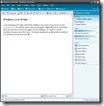
I had lunch today with Brian McElyea who most of you know as the CADFANATIC. He told me about this cool new program called Windows Live Writer that you can use to post messages to your Weblog. So I guess I would consider this post the first test! I’ve been looking for an alternative method to construct content for the Blog. This looks like a pretty nice little tool. Previous to this I was typing up the post in Microsoft Word, then pasting the content into TypePad after some intermediate steps involving changing settings. It was a total pain! If you Blog….check out this cool tool! It’s FREE!